

Introduction
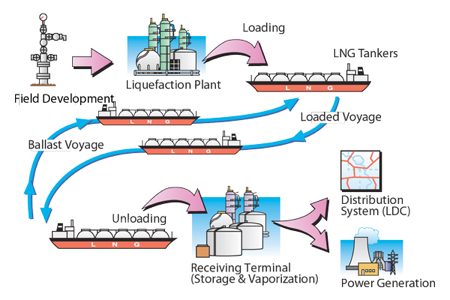
The outlook of LNG is evolving day to day. Lot of LNG terminals are heading towards miniaturization due to myriad methods of regasification methods. Various processes are involved, and the optimization depends on location of plant, its environment conditions, and the production output. As soon as the LNG carrier or vessel arrives at the terminal, it will be transferred to insulated tanks that are usually double walled to maintain the temperature of around minus 160 °C. It gets stored in the liquid state at cryogenic temperature and at atmospheric pressure till it undergoes regasification process.
Regasification is a process on which LNG is converted to natural gas. During this process, LNG is passed through bundle of tubes named Vaporizer. Water acts as a medium in the vaporizer to warm the LNG and turns it to a gaseous state. This is how natural gas is fed into the Transmission System which is a network of gas pipelines that run throughout the country or territory.
Introduction | VAPORIZERS IN REGASIFICATION
Generally, regasification terminals uses different types of vaporizers such as open rack vaporizer, submerged combustion vaporizer, intermediate fluid vaporizer, direct air vaporizer and ambient air vaporizers. Selection and usage of vaporizers are based on size and capacity of regasification and peak shaving facilities.
During the earlier days, LNG regasification terminals acted as a utility companies in suppling natural gas via pipelines. Presently, it has undergone lot of modernization and it has been integrated with power plants and also in waste heat recovery in reducing carbon footprint. An overall perception about LNG is clean and green and hence global and emerging markets are embarking on a clean fuel which is natural gas.
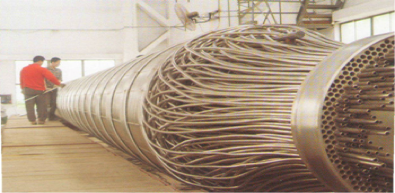
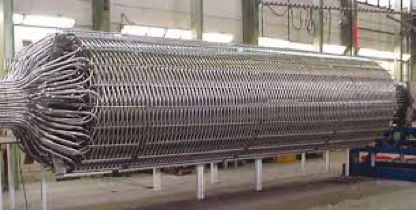
Open Rack Vaporizers and Submerged combustion vaporizers are commonly used in regasification terminals that are in countries where site ambient temperatures shall fall below 18°C during winter months.
Intermediate fluid and direct air vaporizers are used in regasification terminals where site ambient temperatures are constant and do not fall below 18°C.
OPEN RACK VAPORIZER
Sea water is the source of heat for open rack vaporizer. LNG terminals are located nearer to sea which makes it easier to access LNG carriers. Seawater is abundance in quantity and economical source of heat for operation. The seawater temperature for operation of open rack vaporizer is above 5°C . LNG terminals in Japan, Korea and Europe use such vaporizers widely.
The high mechanical strength and thermal conductivity of aluminum tubes in open rack vaporizers makes it suitable to operate in cryogenic temperature. Open Rack Vaporizers require regular maintenance to keep the finned tube from being damaged due to sea water usage. Due to water chemistry, corrosion gets initiated and if not detected via regular inspection, it leads to leak that reduces the efficiency of the operation and may lead to catastrophe too.
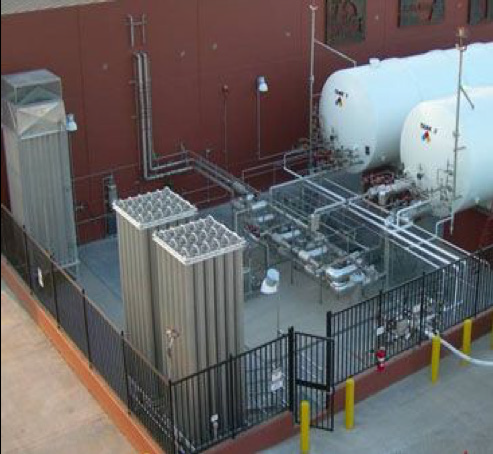
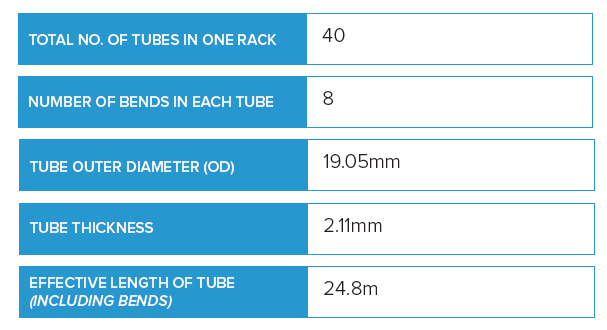
APRIS was used to inspect such Open Rack Vaporizers in one of the regasification terminals in Europe. From the above picture, it is quite evident that tubes associated with open rack vaporizers are finned and are with multiple bend tubes.
THE PROBLEM with Open Rack Vaporizer
Due to PH level of sea water and microbial activity, corrosion was induced in those tubes. Though efficiency was high at the initial stage of operation, it started to deteriorate after few months to year in operation. Due to high demand, they are unable to shut the process for longer duration and unable to find suitable technology to inspect such complicated tubes with numerous bends and are with fins.
SOLUTION
When APRIS was introduced, operation team found benefits of our patented technology in terms of speed (less than 10 seconds per tube irrespective of the bends) and usability on any tube material and shaped since it uses only sound waves that propagate using air as a medium.
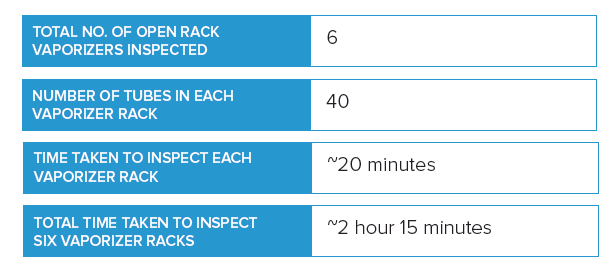
As soon as the measurements are taken, an analysis was performed on the field and preliminary findings were presented to the operations and maintenance team of regasification unit.
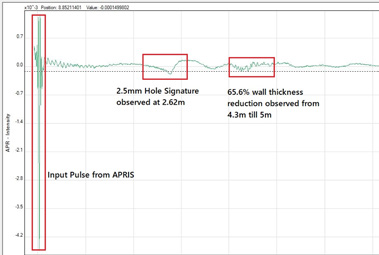
SUMMARY OF FINDINGS
5 tubes out of 6 vaporizer racks were leaking. Precise location of the leaks was indicated. Nearly 30% of tubes in all vaporizers racks was facing wall thickness reduction due to corrosion.
Corrective actions were taken by the operations team and then vaporizers were placed back into operation before end of the day. Quick inspection with quick report helped the team to reduce downtime and bring back the vaporizer to the same efficiency level as it was operating few months back by taking corrective actions.
SUBMERGED COMBUSTION VAPORIZERS
Submerged combustion vaporizers are comprising of stainless tube coils through which LNG flows. The tubes associated with submerged combustion vaporizers are submerged in water. The water is heated by hot flue gases from a submerged gas burner.
Though these submerged combustion vaporizers are reliable, its controls are complex and even a small leak will result in shutdown. Hence routine inspection is mandatory and APRIS adds more value by doing a quick inspection and issue a report at site to take corrective action. Moreover, precise location and size of the defect will help operation and maintenance team to take corrective actions and predict the lifetime of these vaporizers.
One of such submerged combustion vaporizers was inspected in Europe which was discarded by operator due to multiple leaks but unable to locate it precisely.
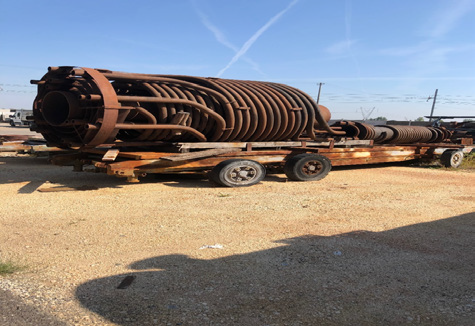
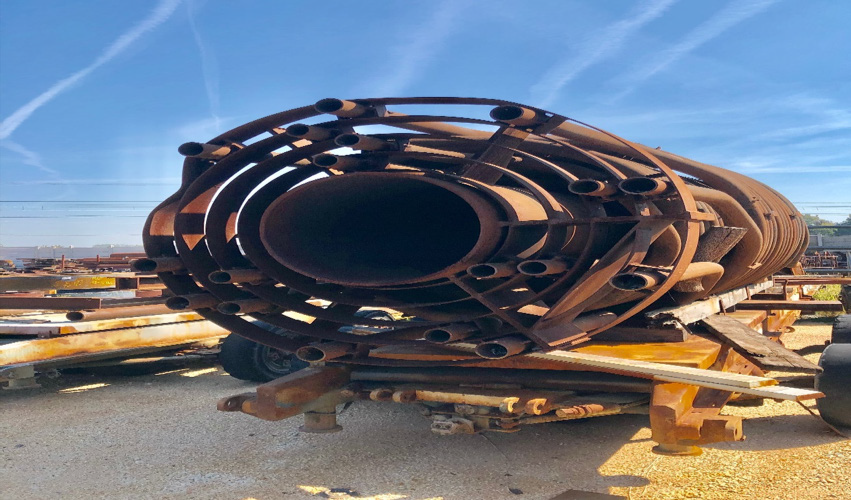
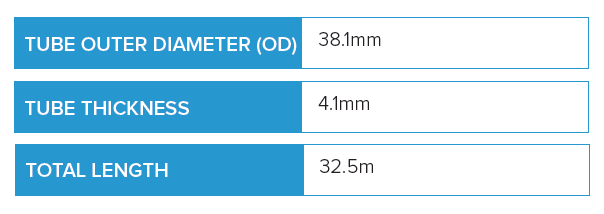
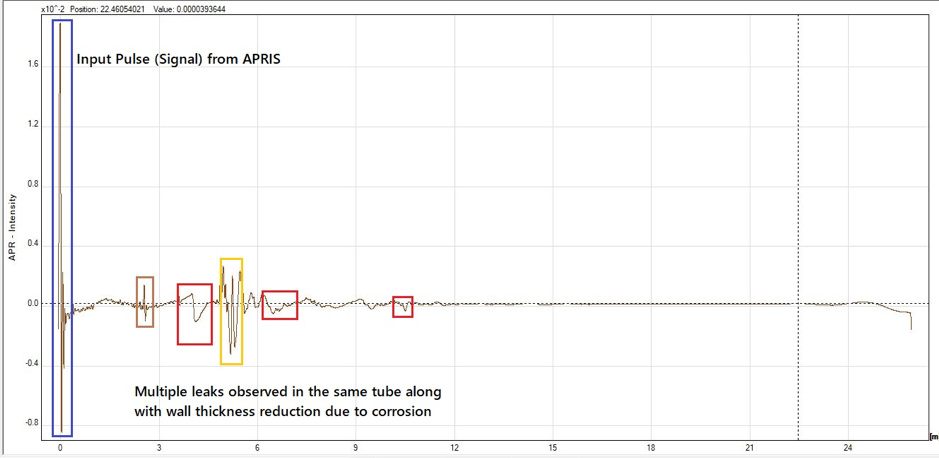
The tube associated with such vaporizers are coiled in nature and hence inspected from both ends. So, despite being greater than 25m in length, detection of defects and sizing was accurate with APRIS.
SUMMARY OF FINDINGS
Leaks were located precisely on each tube. Few tubes had multiple leaks at different locations. Nearly 70% wall thickness was observed in all tubes due to corrosion.
AMBIENT AIR VAPORIZERS
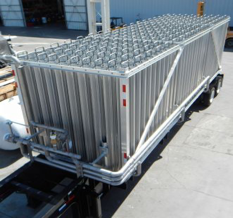
In air separation plants, Direct ambient air vaporizers are used in cryogenic services. Such ambient air vaporizers are like vertical type heat exchanger. They are designed for icing on the tube side and require defrosting. They have been used for optimization specially to manage peak demands and apt for smaller terminals. When compared to other types vaporizer, they require a greater number of vaporizer units to perform the same function.
Whilst operation on longer duration, dense icing occurs on the vaporizer tubes. Hence it requires defrosting time. Such defrosting needs the vaporizer to be placed on a standby mode. Natural draft convection or force draft air fans helps in defrosting. Force draft fans can accelerate the defrosting time, but additional fan horsepower would be required. Accelerating the defrosting time shall not be significant as ice layers acts as an insulator that affects heat transfer.
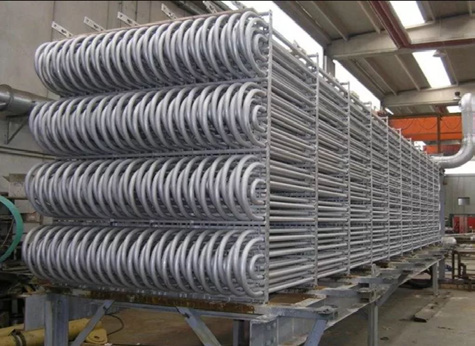
Tube leaks are the predominant issue being faced by the operators of ambient air vaporizers. Due to cumbersome operations, such vaporizers shall be inspected using APRIS whilst it’s on a standby mode because it takes only 10 seconds to inspect a tube. So, on average 200-300 tubes shall be inspected during the standby mode and it will not impact their operations. Such efficient inspection will improve the efficacy of their operation and maintenance together.
REFERENCES
Books:
1. LNG Receiving and Regasification Terminals: An Overview of Design, Operation and Project Development Considerations, Ram R Takarad (Houston Tex: Zeus Development Corp, 2003)
Articles:
1. Linde,” Air heated Pre-Heaters”
2. Isan,” Cryogenic Vaporizers”
3. Dhirav Patel, John Mak and Daniel Rivera Joanne Angtuaco (Fluor),” LNG Vaporizer selection based on site ambient conditions”
